How do Nuclear reactors work?
As of 2021, all currently operating nuclear reactors generate energy through the process of atomic fission, although there are some fusion reactors currently in development.
Nuclear fission in the process by which bigger atoms are split into two smaller atoms, releasing energy in the process. Nuclear fusion is the opposite, when two atoms combine to form a larger atom which also releases energy. The Sun is powered by nuclear fusion, where hydrogen atoms combine to form helium, mostly.
Nuclear reactors are essentially a controlled nuclear chain reaction, where the energy produced is used to generate steam which in turn powers a turbine. Similar to any engine, the difference is that relatively little power needs to be put into a nuclear reactor to produce a lot of energy. It is also ‘clean’ in the sense that it produces no CO2 emissions.
The concerns about nuclear power are (usually) focused around waste disposal, nuclear abilities may lead to more weapons and nuclear melt downs. The attached video (3 reasons why nuclear energy is awesome) goes some way to addressing those.
The pros of nuclear power
Back in 2012, Sylvia wrote an article – On the Pros of Nuclear Power – about the necessities funding nuclear power research as an energy for the future for The Guardian.
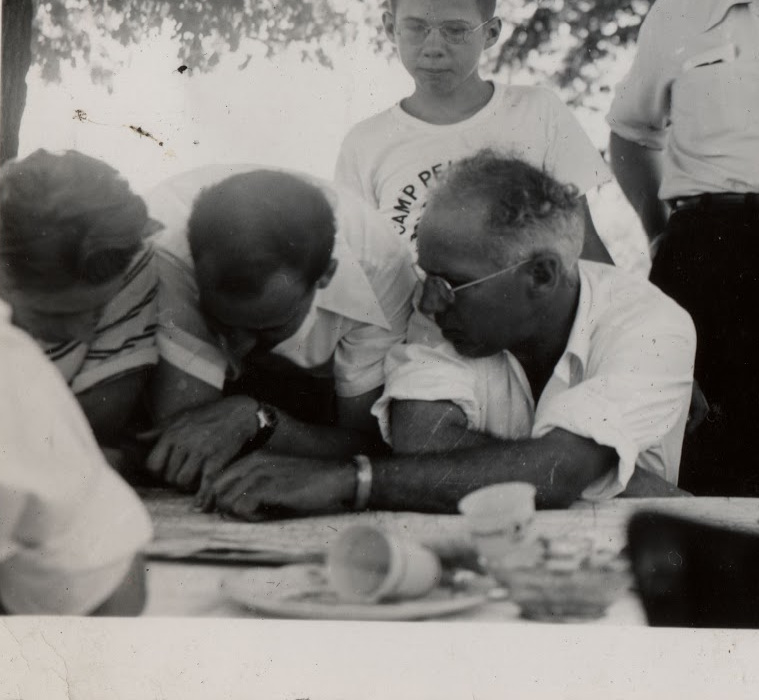
Nuclear Power
Both Stuart McLain and Howard McLain (Leigh’s son) worked in the Nuclear Power. After his time as an officer in the US Army at Abeerdeen Proving grounds, when he promptly resigned after VJ day, Stuart returned to run the Chemical Engineering Department at Wayne State in Detroit in 1945. He was headhunted by Oak Ridge National Laboratory and was appointed the Assistant Director of the Technical Division in charge of Engineering Development Programs in 1948. From then on he was in charge of building the nuclear power program until the 1970s.
Howard, having returned from the service after fighting in the European Theater in WW II, went to Wayne State University starting in 1947 or 48 under the GI Bill, right when Stuart was leaving. He graduated from Wayne State in around 1951 with a BSc in Chemical Engineering, got a MSc (U of Minnesota) in 1953 and a PhD (Purdue) in 1956 in the same subject. He then moved to Oak Ridge National Laboratory, in the Nuclear Engineering Division where he helped build the Hi Flux Isotope Reactor (HFIR) which came online in 1967, he then worked on breeder reactors and on heat exchange work until the year 2000.
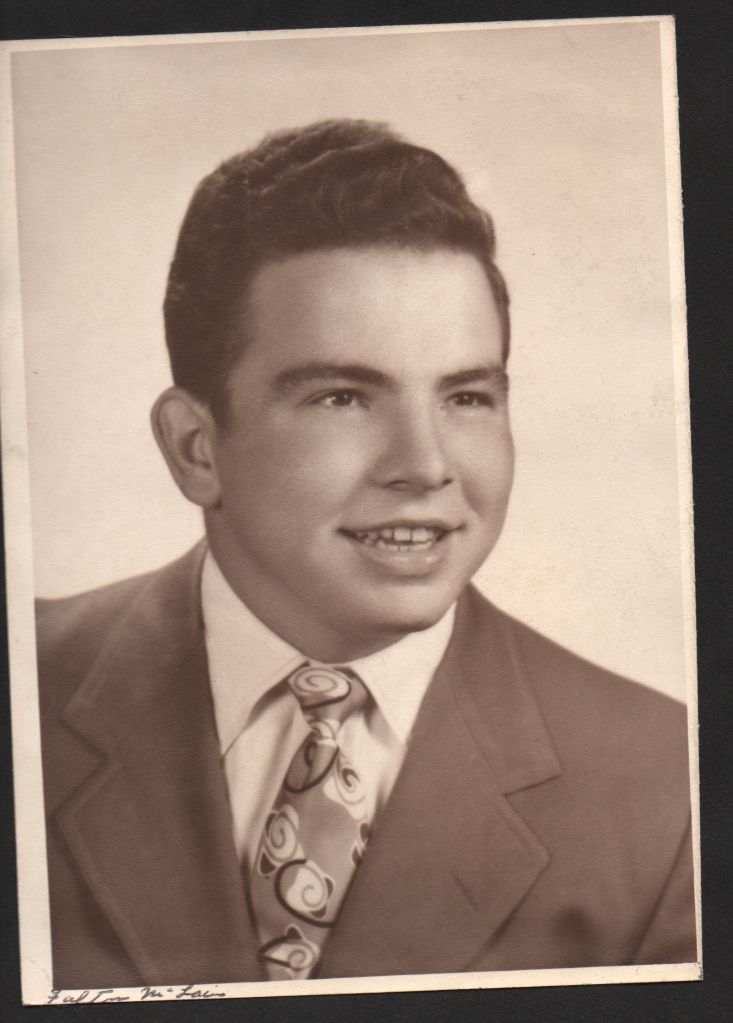
Fulton McLain (IV), Raynor’s youngest son, was also in the nuclear feild. Trained as a Mathematician, Fulton worked on Nuclear Submarines in the 1960, which at the time was so top secret that he couldn’t even tell anyone in his family where he was. Once it was declassified, it turned out he had been stationed in Greenland and in Nova Scotia where he, apparently, was instrumental in helping build and maintain the first nuclear submarines.
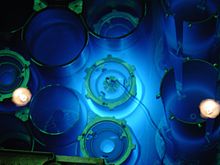
Hi Flux Isotope Reactor Oak Ridge Tennessee
The Hi Flux Isotope reactor, which is still in operation today, was approved of by Stuart when he was at the Atomic Energy commission. Howard was on the core design team for the HFIR at Oak Ridge in the 1960s.
Notes
Neutron physics
Links to the science
Reactor design
History of it
whatever else
The future
 Henry's boys